The Cost of Slow Lead Response: Data Analysis for US Home Services Businesses

The Cost of Slow Lead Response: Data Analysis for US Home Services Businesses
In the competitive world of home services, where businesses vie for attention in roofing, HVAC, plumbing, and more, the speed of lead response can make or break your success. According to the MIT Lead Response Management Study, which examined 3 years of data, home service businesses that respond to leads within the first hour are 7 times more likely to have meaningful conversations with decision-makers. This article delves into the cost of slow lead response and provides actionable strategies to help you book more jobs and close more leads.

The Importance of Lead Response Time
In the home services industry, speed is everything. Customers often reach out to multiple businesses simultaneously, and the first one to respond usually gets the job. Here are some key reasons why lead response time is crucial:
- First Impression: A quick response shows professionalism and eagerness to help.
- Customer Satisfaction: Fast responses lead to higher customer satisfaction rates.
- Competitive Edge: Being the first to respond gives you an advantage over competitors.
Industry Benchmarks
To understand the importance of lead response time, let's look at some industry benchmarks:
- Average Response Time: The average response time for home service businesses is around 4-6 hours.
- Top Performers: The top 10% of businesses respond within 5 minutes.
- Conversion Rates: Businesses that respond within the first hour have a conversion rate of about 39%.
The Cost of Slow Lead Response
Slow lead response times can have a significant impact on your business. Here are some of the costs associated with slow response times:
- Lost Revenue: Slow responses lead to lost opportunities and, ultimately, lost revenue.
- Customer Dissatisfaction: Slow responses can lead to customer dissatisfaction and negative reviews.
- Competitive Disadvantage: Slow responses put you at a disadvantage compared to competitors who respond quickly.
Data Analysis
Let's dive into some data to understand the cost of slow lead response:
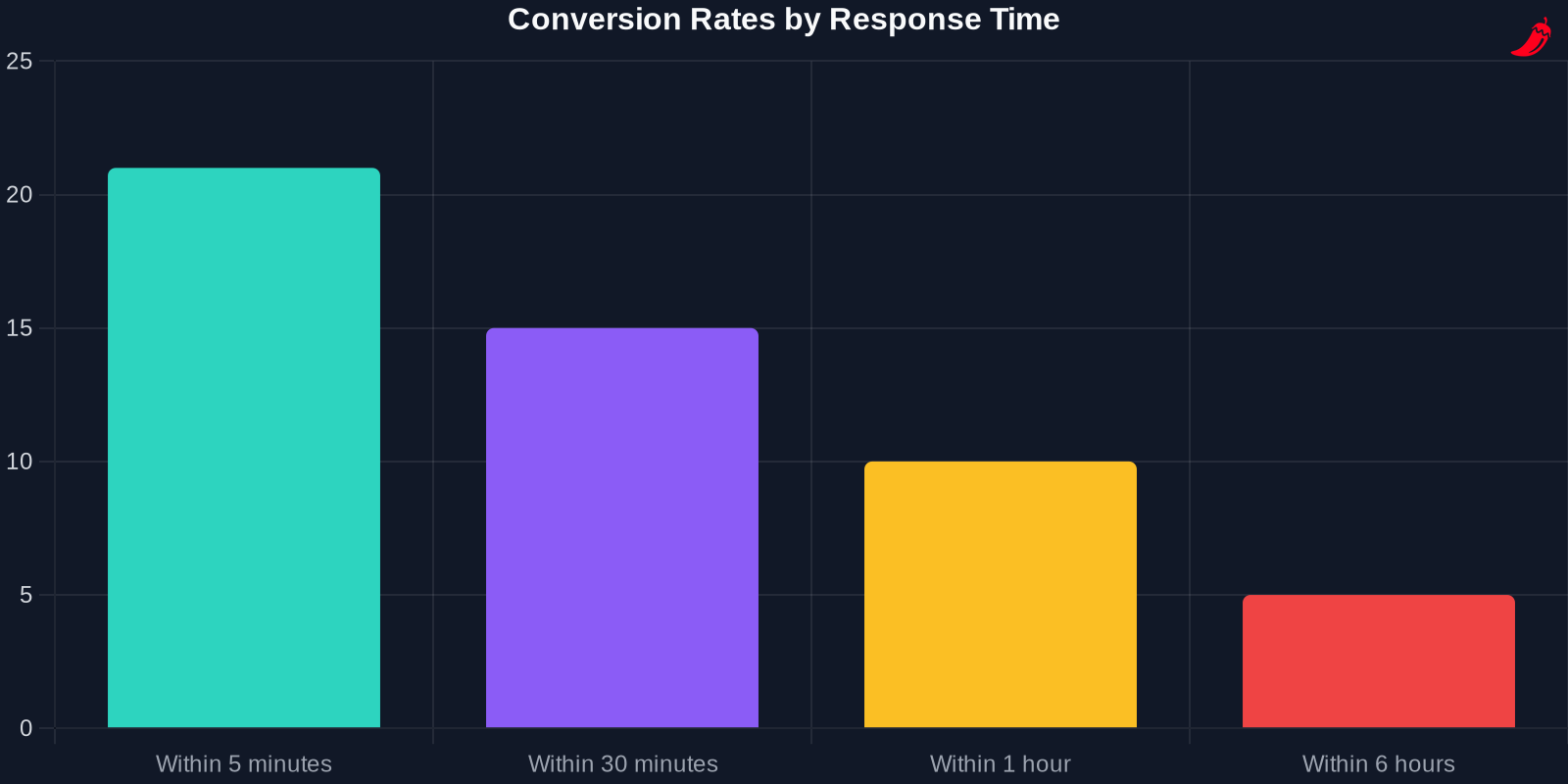
- Response Time vs. Conversion Rate: Businesses that respond within 5 minutes have a conversion rate of 21%, while those that respond within 30 minutes have a conversion rate of 15%.
- Response Time vs. Revenue: Businesses that respond within 5 minutes generate 4 times more revenue than those that respond within 30 minutes.
Strategies to Improve Lead Response Time
Improving your lead response time can have a significant impact on your business. Here are some strategies to help you respond faster and more effectively:
- Automate Lead Capture: Use tools to automatically capture leads from various sources and funnel them into a central system.
- Implement Lead Routing: Route leads to the appropriate team members based on their expertise and availability.
- Use Templates: Create templates for common responses to speed up the process.
Leveraging Technology
Technology can play a crucial role in improving your lead response time. Here are some tools and technologies that can help:
- CRM Systems: Customer Relationship Management (CRM) systems can help you manage and respond to leads more efficiently.
- AI and Chatbots: AI-powered chatbots can provide instant responses to common queries and gather initial information.
- Sales Automation: Tools like PepperInsight.com can help you automate your sales processes and respond to leads faster.
Case Studies
Let's look at some real-world examples of businesses that have improved their lead response times and the impact it had on their operations:
Case Study 1: HVAC Business
- Before: Average response time of 6 hours, conversion rate of 10%.
- After: Implemented a CRM system and reduced response time to 15 minutes, increasing conversion rate to 25%.
Case Study 2: Plumbing Business
- Before: Average response time of 4 hours, conversion rate of 12%.
- After: Used AI-powered chatbots and reduced response time to 5 minutes, increasing conversion rate to 30%.
| Metric | Before | After |
|---|---|---|
| Response Time | 6 hours | 15 minutes |
| Conversion Rate | 10% | 25% |
The Role of AI in Lead Response
AI is revolutionizing the way businesses respond to leads. Here are some ways AI can help improve your lead response time:
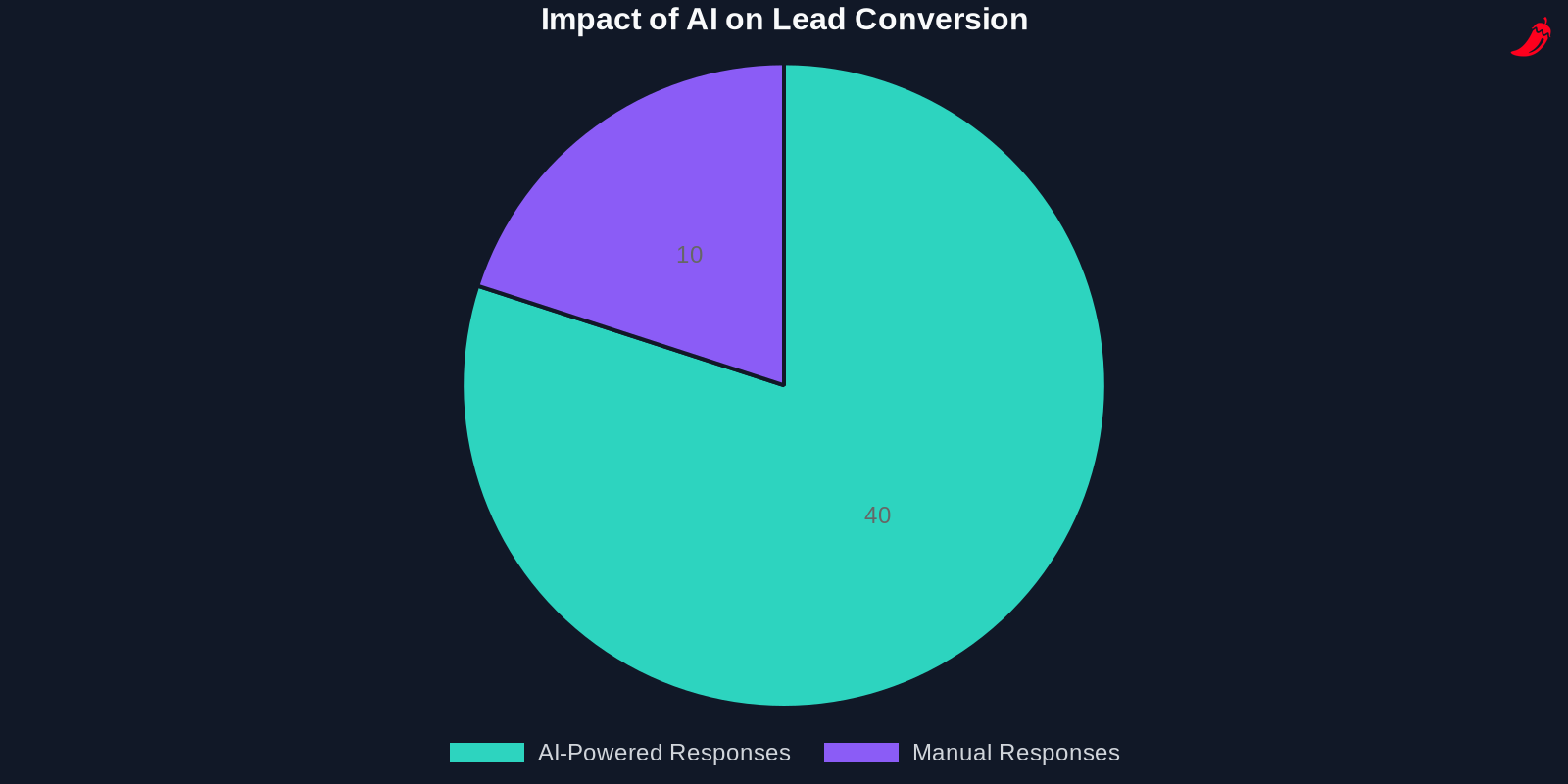
- Instant Responses: AI-powered chatbots can provide instant responses to common queries, ensuring that leads are engaged immediately.
- Lead Scoring: AI can score leads based on their likelihood to convert, helping you prioritize your responses.
- Personalization: AI can personalize responses based on the lead's information, making your interactions more effective.
Best Practices for Lead Response
To ensure that your lead response strategy is effective, follow these best practices:
- Set Clear Expectations: Let leads know when they can expect a response and what the next steps will be.
- Follow Up: If you can't respond immediately, make sure to follow up as soon as possible.
- Train Your Team: Ensure that your team is trained on how to respond to leads effectively and efficiently.
The key to successful lead response is not just speed, but also the quality and relevance of your interactions.
Measuring Success
To determine the effectiveness of your lead response strategy, track these key metrics:
- Response Time: The average time it takes for your team to respond to leads.
- Conversion Rate: The percentage of leads that convert into paying customers.
- Customer Satisfaction: The level of satisfaction among your customers based on their interactions with your team.
Tools for Measurement
Use these tools to measure and analyze your lead response performance:
- CRM Analytics: Most CRM systems come with built-in analytics tools to track response times and conversion rates.
- Survey Tools: Use survey tools to gather feedback from customers about their satisfaction levels.
- AI-Powered Insights: Tools like PepperInsight.com can provide AI-powered insights into your lead response performance.
Conclusion
In the competitive world of home services, the speed of your lead response can make or break your success. By understanding the cost of slow lead response and implementing strategies to improve your response time, you can significantly boost your conversion rates and revenue. Leveraging technology and AI can further enhance your lead response strategy, ensuring that you stay ahead of the competition.
Key Takeaways
By focusing on these key takeaways and implementing the strategies discussed in this article, you can transform your lead response process and achieve greater success in your home services business.