AI-Driven FPSO Mooring Monitoring: Longitude’s Game-Changing System

AI-Driven FPSO Mooring Monitoring: Longitude’s Game-Changing System
The offshore oil and gas industry is entering a new era of digital intelligence, driven by artificial intelligence systems that promise to transform safety, efficiency, and operational uptime. In June 2025, Longitude unveiled a groundbreaking AI-driven FPSO mooring monitoring system, capable of continuously tracking vessel position with unprecedented accuracy. This technology addresses one of the most critical challenges in floating production storage and offloading (FPSO) operations: maintaining safe mooring integrity under dynamic environmental loads.
Traditional mooring monitoring relies on periodic visual inspections and basic strain gauges. These methods cannot capture real-time dynamic loads, corrosion progression, or the cumulative effects of storms. Longitude’s AI system changes this paradigm by integrating multiple sensor feeds and using machine learning to predict mooring line degradation.
Key Capabilities of Longitude’s System
Longitude claims their system provides continuous, automated monitoring of:
- Position and excursion monitoring: Tracking vessel position relative to operational limits with centimeter-level accuracy.
- Mooring line tension estimation: Using AI models that correlate environmental data (waves, wind, current) with tension readings.
- Anomaly detection: Identifying unusual load patterns that may indicate partial line failure or seabed changes.
- Degradation trend analysis: Predicting remaining useful life for each mooring line.
Comparison with Traditional Monitoring
Cost Savings
Unplanned mooring repairs can cost between $500,000 and $2 million per incident, plus lost production revenue of $1–5 million per day. The AI system reduces inspection costs and extends mooring component life, yielding significant economic returns.
Industry Adoption and Future Trends
Several major FPSO operators are already piloting Longitude’s technology in the North Sea and offshore Brazil. These regions are particularly challenging due to harsh weather and deepwater conditions.

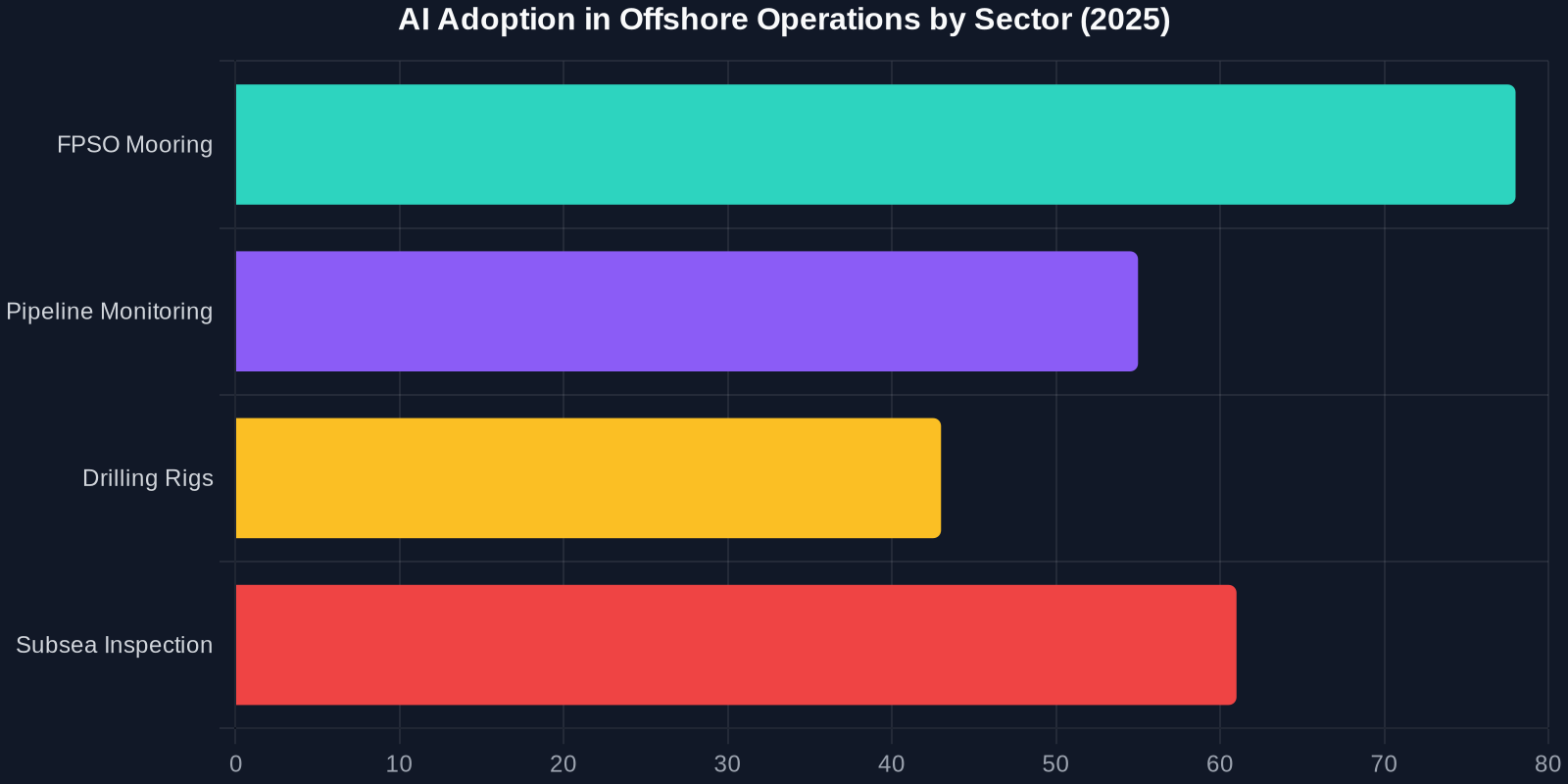
As the chart shows, the offshore industry is accelerating adoption of AI-driven monitoring, with FPSO mooring monitoring leading the trend. The next frontier involves integration with autonomous underwater vehicles (AUVs) for subsea inspection.
How This Fits Into the Digital Oil Field
Longitude’s system is part of a broader movement toward the digital oil field, where sensors, analytics, and automation converge. The mooring monitoring system feeds data into cloud-based platforms like Microsoft Azure or AWS for advanced analytics.
The Bottom Line
Longitude’s AI-driven FPSO mooring monitoring system represents a significant leap forward in offshore safety and operational efficiency. By harnessing real-time sensor data and machine learning, operators can move from reactive to proactive management of their mooring systems. The technology has already demonstrated compelling results in pilot projects and is poised for broad commercial adoption.

As the offshore industry continues to embrace digital transformation, systems like Longitude’s will become standard equipment on new-build FPSOs and retrofits on existing units. The benefits in safety, cost savings, and uptime are too significant to ignore.
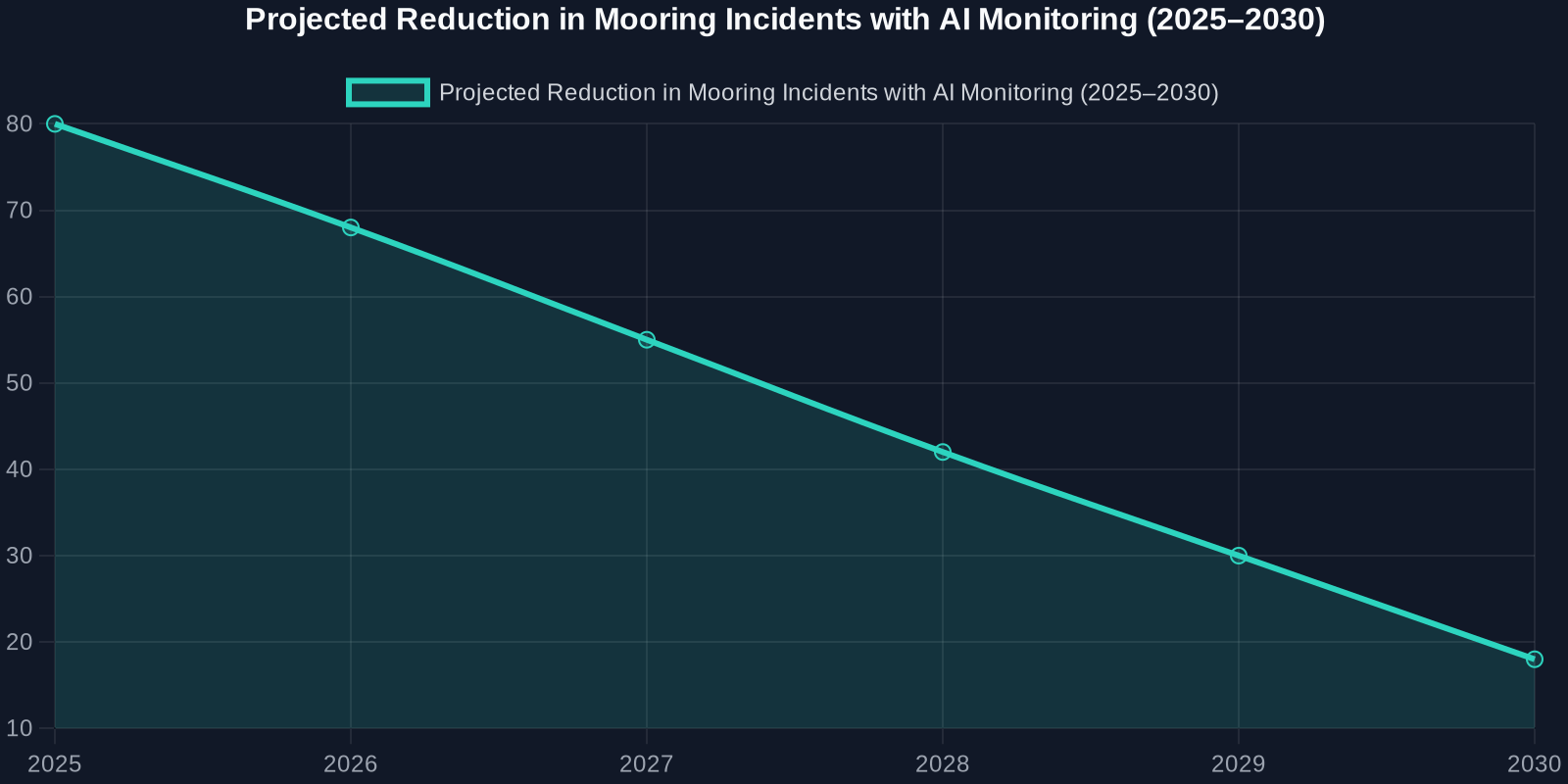
Key Takeaways
Conclusion
Longitude’s system is not just a marginal improvement—it is a paradigm shift. For professionals involved in offshore operations, understanding and adopting such AI-driven technologies is becoming essential for maintaining competitive advantage and meeting increasingly strict safety regulations. The future of FPSO operations is intelligent, predictive, and data-centric.
Are you evaluating AI solutions for your offshore operations? Consider starting with a pilot project on one FPSO to measure real-world ROI before scaling. Contact Longitude for a demo or visit their website for technical white papers.