How Agentic AI Modernizes Outbound Sales Campaigns: A Strategic Guide

How Agentic AI Modernizes Outbound Sales Campaigns
Outbound sales has long been a numbers game: dial more leads, send more emails, close more deals. But the era of spray-and-pray is ending. A new wave of agentic AI is transforming outbound sales campaigns into precision engines that prospect, personalize, and nurture at machine speed. According to recent data, 24% of consumers say that knowing an AI would only buy from pre-approved retailers would most increase their confidence — revealing a trust gap that intelligent agents can help bridge.
In this comprehensive guide, we explore how agentic AI modernizes outbound sales campaigns, from autonomous prospecting to predictive analytics. You'll learn practical strategies for deploying AI agents, see real-world performance comparisons, and understand how to align this technology with evolving buyer expectations.
What Is Agentic AI and Why It Matters for Sales
Agentic AI refers to systems that don't just answer questions — they take action. Unlike traditional chatbots or passive analytics, agentic AI can initiate sequences, make decisions, and execute multi-step workflows with minimal human oversight. In outbound sales, this means AI agents can research leads, craft personalized messages, schedule meetings, and even handle objection handling in real time.
Sales teams using agentic AI report significant gains in efficiency and conversion. A study of 450 million customer interactions found that 2025 marked a turning point for financial crime compliance as leaders invested in stronger data foundations and piloted agentic AI. The same principle applies to sales: better data plus autonomous action equals higher performance.
How Agentic AI Reshapes Outbound Sales Campaigns
Outbound sales campaigns have historically suffered from low response rates — often below 2% for cold outreach. Agentic AI changes this by enabling hyper-personalization at scale and automating repetitive tasks so humans can focus on high-value interactions.
This shift from manual, rule-based outreach to intelligent, adaptive campaigns represents a fundamental change in how sales teams operate. Let's examine the core components that make agentic AI so effective.
Core Components of an AI-Powered Outbound Campaign
1. Intelligent Prospecting Engine
Traditional prospecting relies on static lists and manual research. Agentic AI turns prospecting into a dynamic, continuous process. AI agents crawl industry news, job changes, funding announcements, and social media activity to identify in-market buyers. They score leads based on fit and intent, then automatically enrich CRM records with fresh data.
2. Conversational AI for First Contact
First impressions matter. Agentic AI can initiate natural-sounding conversations via email or chat, referencing specific details about the prospect's company or role. These systems use large language models (LLMs) fine-tuned for sales to maintain a professional tone while asking qualifying questions.
These improvements stem from the AI's ability to work continuously, learning from every interaction and refining its approach.
Real-World Applications and Industry Adoption
Agentic AI is not a theoretical concept — it's already being deployed across industries. The chart below shows adoption rates by sector, based on surveys of sales leaders.
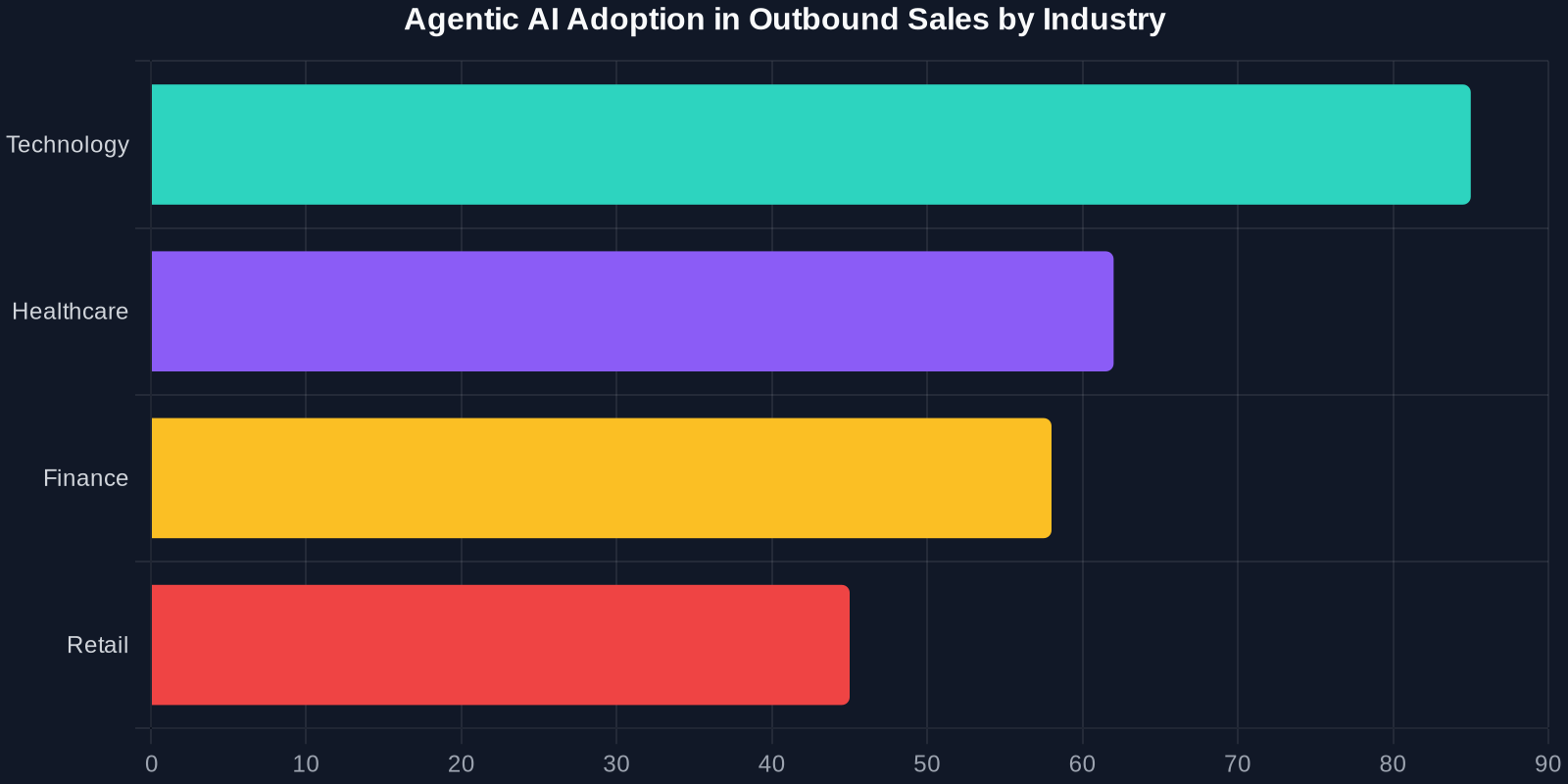
Technology companies lead adoption at 85%, drawn to early adopter advantages. Healthcare follows at 62%, where personalized patient outreach requires deep context. Finance and retail are rapidly scaling, with compliance-driven finance taking a more measured approach.
Use Case: B2B SaaS Scaling
A mid-market SaaS company deployed agentic AI to handle its outbound prospecting for enterprise accounts. The AI researched target companies, identified decision-makers, and sent personalized video messages. Within 90 days, the company saw a 3x increase in qualified meetings and reduced cost per lead by 60%.
Integrating Agentic AI with Your Sales Stack
A successful agentic AI deployment doesn't require replacing your entire tech stack. Instead, AI agents integrate with existing CRM, email, and analytics tools through APIs and webhooks. The key steps are:
- Data unification: Connect all customer data sources to give the AI a 360-degree view.
- Workflow mapping: Define the sequences and decision trees the agent will follow.
- Guardrails and compliance: Set rules for frequency, messaging, and channel usage to avoid spamming.
- Feedback loop: Allow human reps to review and override AI actions, feeding corrections back into the model.
Future Trends: Agentic AI and Sales Evolution
Looking ahead, agentic AI will become even more autonomous and predictive. Instead of just responding to triggers, future agents will proactively identify market shifts and adjust campaign strategies. The line between outbound and inbound will blur as AI agents create personalized content that attracts high-value prospects.
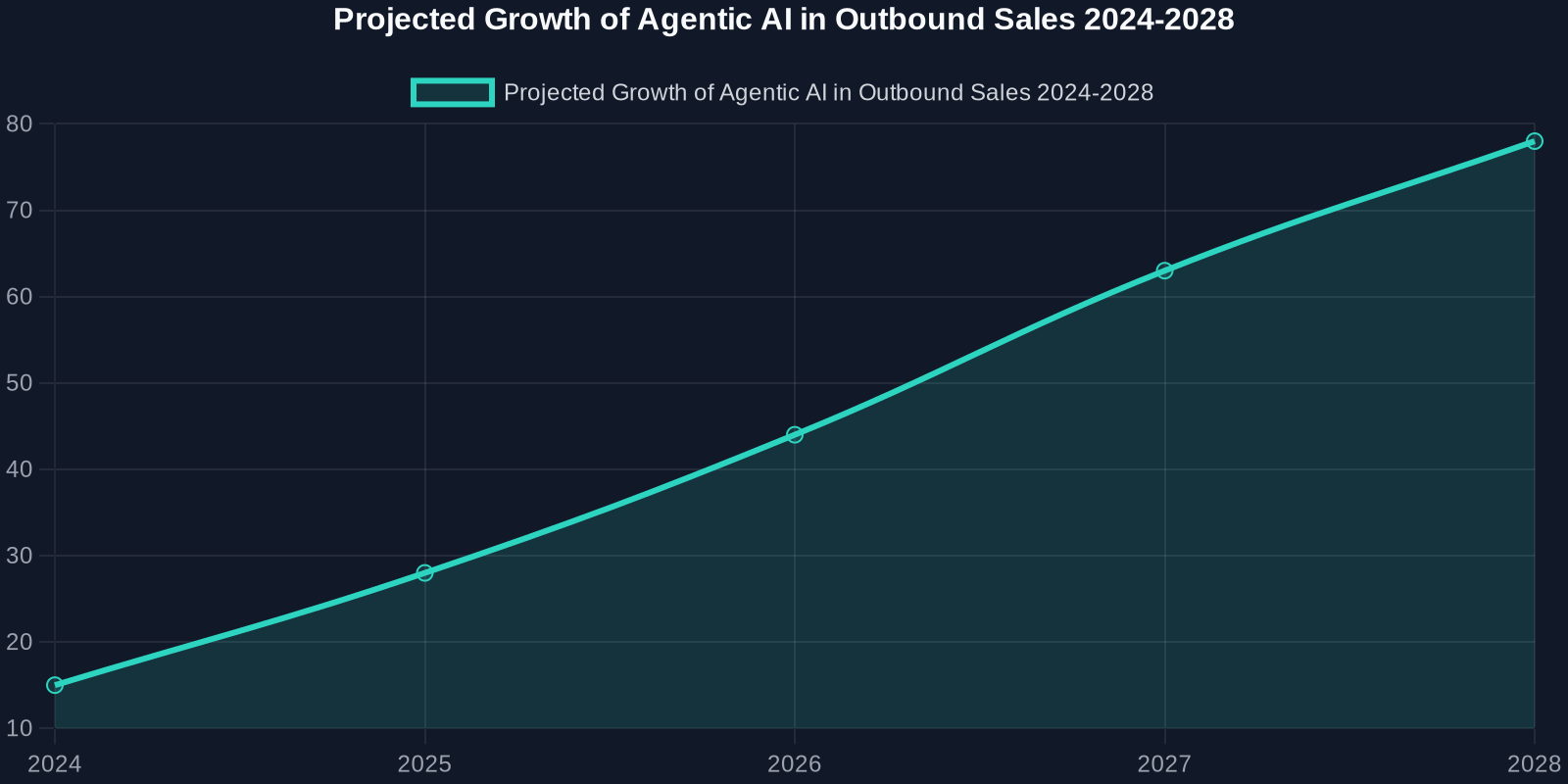
Sales teams that invest in agentic AI today will build a competitive advantage that compounds over time. The technology is still early, but the trajectory is clear: outbound sales is becoming an AI-first discipline.
Key Takeaways
Agentic AI is not a futuristic concept — it's a practical tool that is modernizing outbound sales campaigns right now. The companies that embrace it are seeing measurable gains in efficiency, personalization, and revenue.
Conclusion: Is Your Outbound Campaign Ready for Agentic AI?
The data is clear: agentic AI modernizes outbound sales campaigns by making them smarter, faster, and more personalized. Whether you're the head of sales at a startup or the VP of revenue at an enterprise, now is the time to experiment with these tools. Start with a single campaign, measure everything, and scale what works.
Ready to transform your outbound sales? Evaluate your current stack, identify the most time-consuming manual tasks, and pilot an agentic AI solution. The future of sales is autonomous, and the future is already here.
For further reading, explore our guide on agentic AI outbound sales and discover how leading companies are already reaping the benefits.